Larchmont mold removal in an older house: what comes out and what stays
Mold in an old Larchmont basement can sit in finishes added over many decades. Describe what you see, and the assessment that sets the removal scope gets booked before any demolition.
Ask what keeps the water coming back. Asking commits you to nothing.
We help you find out what keeps sending water downstairs and get an assessment booked first, with any removal or drying from a different company after it.
In writing, before you book
Asking us costs nothing and binds you to nothing.
We ask what brings the water back before anyone cuts.
Whoever checks the result is not who removed the mold.
The $100 is applied the way our Terms page sets it out.
Each contractor answers for the work under their own contract.
How do I keep a Larchmont removal scope from growing?
Tie every item on it to a finding in the assessment. Ask the remover to explain any addition in writing, and ask the assessor whether it is wet, moldy or neither.
Should I rebuild the basement before an outside fix is done?
Wait if you can. If the cause is outside, finishing the inside first risks wetting it again. Ask the assessor which fix has to come first.
Do I need coastal review for interior removal?
Ask the Building Department. The waterfront program reaches the whole Village, so the answer depends on what the work touches. Interior cleanup and exterior changes are different questions.
Signs
Marks that point to mold remediation in Larchmont
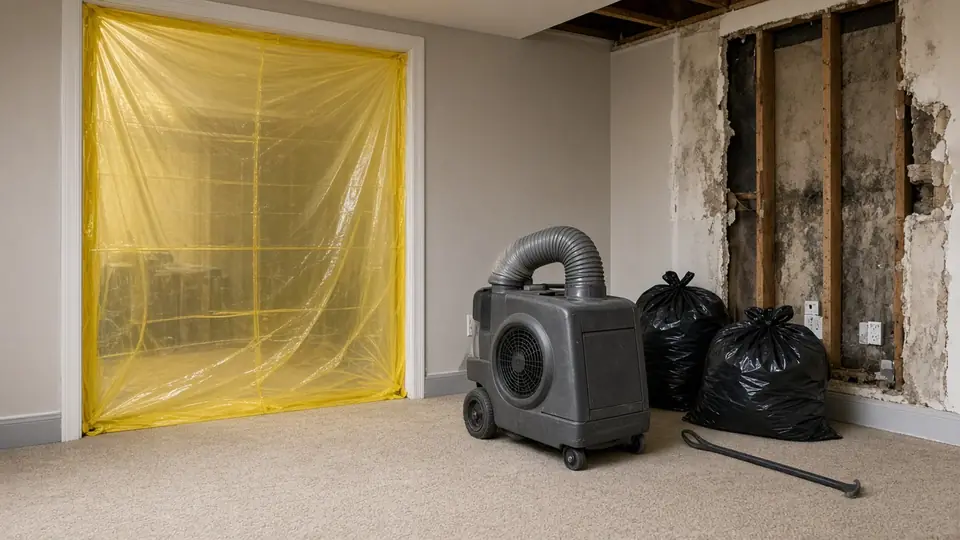
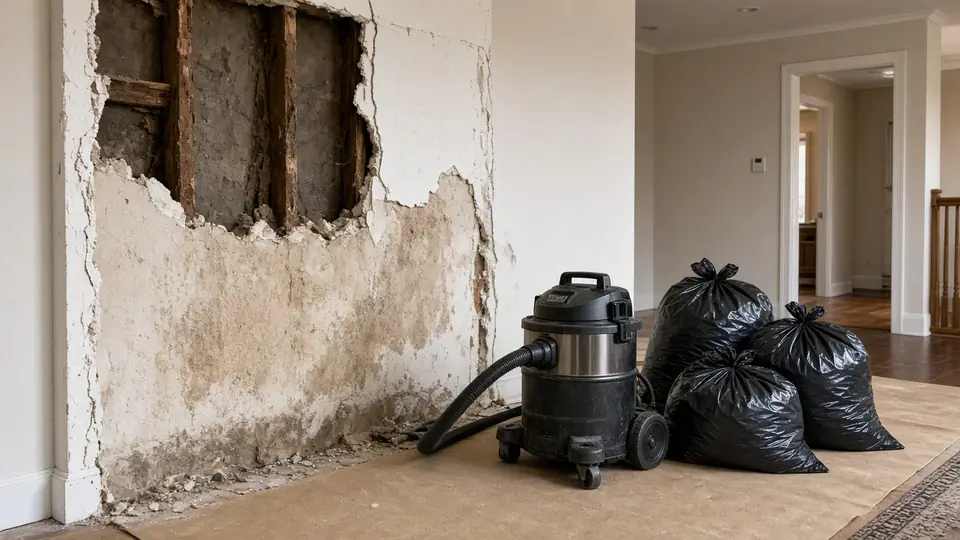
Plaster or paneling that feels loosePress on it. If it feels loose or soft, the surface may have let go of the wall, and wet material may sit behind it.
Old carpet laid directly over a slabCarpet over concrete holds moisture against the floor. If it feels cool or smells sour, plan on it coming out.
Mold on a closet shelf that returns after cleaningA spot that keeps coming back is telling you the wall behind it is still wet. Cleaning the surface will not end that.
Boxes and insulation stacked against a foundation wallStored items trap moisture against the wall. Move them out and look at what was behind them before you scope the job.
Older Larchmont interiors and what goes on the removal list
More than half of Larchmont's homes were built by 1939. Interiors that old have been finished, refinished and patched, so the layers behind a stain differ from wall to wall.
The EPA says porous materials such as carpet may need discarding once mold works in. Hard surfaces can often be cleaned. Ask the remover to sort every item on the scope into one group or the other, and to say why.
Labor Law section 930 defines remediation as removing and cleaning mold, and excludes fixing the moisture source. A removal quote does not promise a dry wall, so ask who will fix the water path.
When the fix is outside the wall, the permit question comes first
In Larchmont the Building Department issues building permits, and the Building Inspector is the floodplain administrator. The Village flood law is Chapter 337, and a joint waterfront program extends coastal review to the entire Village.
If the assessor traces the water to grading, a drain or an outside wall, ask the Building Department what applies before you hire for the repair. Do the removal and the outside fix in an order that makes sense.
Otherwise you may rebuild a finished basement and then tear into it again for the outside work.
Two companies on one Larchmont job
Section 936 keeps the assessor and the remover apart at one property. You pick the remover, and you ask someone else to check the result.
Section 947 asks the assessor, where feasible, to confirm after cleanup that the cause was fixed, and to name the kind of contractor who could address it if not. Ask for that finding in the paperwork before you pay the final bill, then choose from several companies in that trade.