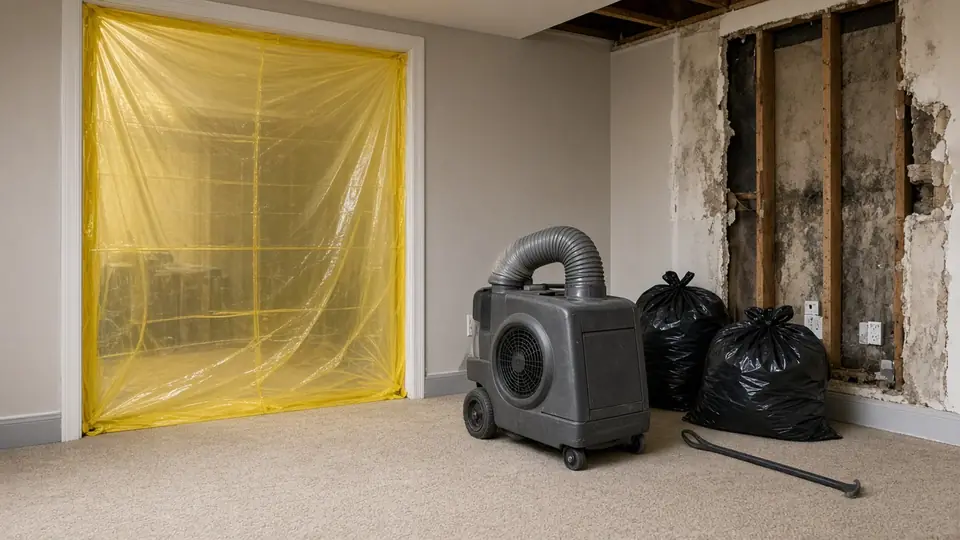
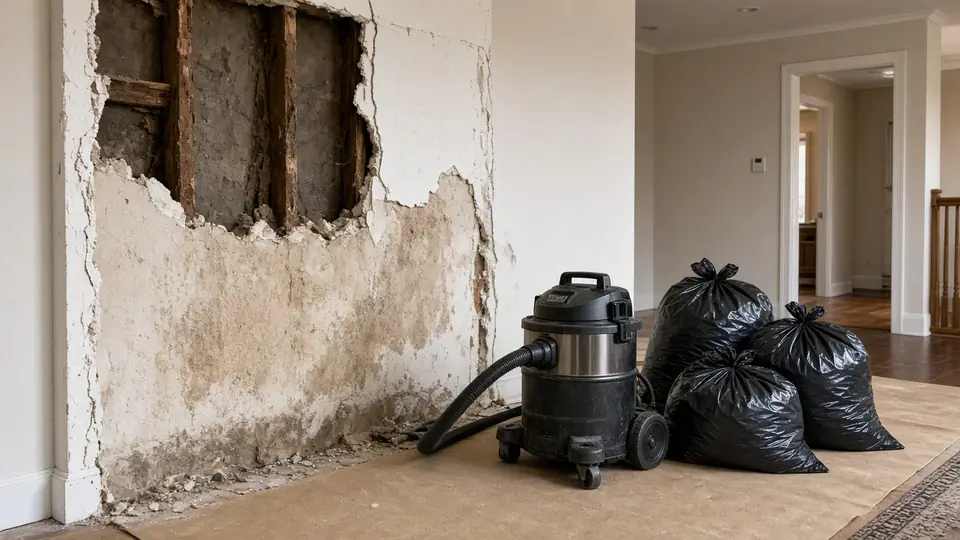
Mold removal for a New Rochelle house, two-family or apartment: scope only what got wet
Removal in New Rochelle starts with a written list of what got wet, and a clear answer on who owns the wall. Send us the damage details, and the assessment behind that list is the first thing booked.
Ask what keeps the water coming back. Asking commits you to nothing.
We help you find out what keeps sending water downstairs and get an assessment booked first, with any removal or drying from a different company after it.
In writing, before you book
Asking us costs nothing and binds you to nothing.
We ask what brings the water back before anyone cuts.
Whoever checks the result is not who removed the mold.
The $100 is applied the way our Terms page sets it out.
Each contractor answers for the work under their own contract.
Before you commit to mold remediation in New Rochelle
How do I know a New Rochelle removal scope covers enough?
Compare it with the assessor's findings. Every wet or moldy material should appear on it, and nothing should be there without a reason.
Does removal fix the water problem too?
No. Removal takes out the mold and what it grew on. The moisture source needs its own fix, and the state definition of remediation leaves it out.
Who in a rented building decides what comes out?
The owner, usually. Report the problem in writing, attach dated photos and ask for the scope and the schedule.
Signs
When New Rochelle damp becomes a case for mold remediation
Drywall wet at the bottom foot or twoWater wicks up from the floor. Mark the highest wet line with a pencil and a date before anyone cuts.
Carpet or pad that took water from a drainAbsorbent items that met drain water are not routine cleanups. Tell every company you call where the water came from.
Mold behind boxes or a stored mattressStored items sit against walls for years and hide the start of a problem. Clear them out and look before the scope is written.
Dark growth on a ceiling below a bathroomA leak above is a different source from a wet wall below. Ask the assessor to find where the water starts.
New Rochelle's older stock and what a scope has to name
The median home in New Rochelle dates to 1954, and about 79 percent of homes predate 1980. If yours is that old, it has been finished, patched and refinished more than once.
A scope should name each room and each material that comes out. Ask for that list, then ask the assessor which items on it are wet, which are moldy and which are neither.
Per the EPA, porous items such as carpet may be beyond saving once mold works in. Ask the remover to split the scope into what goes and what gets cleaned.
A back-up changes what comes out of a New Rochelle basement
The City's own sewer projects were aimed at back-up, which is why a smell at a drain is the first thing you should report.
If water came up a drain, the EPA says to call a professional experienced in cleaning contaminated water damage. That job starts before mold removal, and it can change what stays and what goes.
Tell the assessor and the remover what you know about the water. Then ask them to put it in your scope.
House, two-family or apartment: who signs off on the scope
Only 36.5 percent of New Rochelle's housing units are detached houses, and renters live in nearly half of occupied homes. If you rent, your removal scope involves a wall someone else owns, so ask the owner who signs it.
Labor Law section 930 defines remediation as removal and cleaning, and excludes fixing the moisture source. Ask who will fix the source in your building, and who pays for it.
Under section 936 the same licensee cannot do both jobs at one property. Pick the remover yourself, and ask a different company to check the result.
Other jobs
Other jobs the same New Rochelle water can lead to