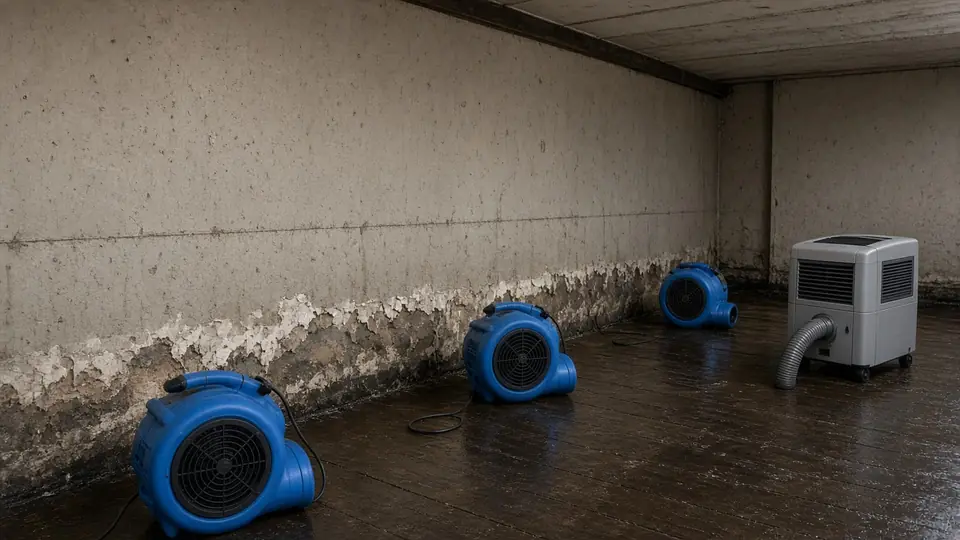
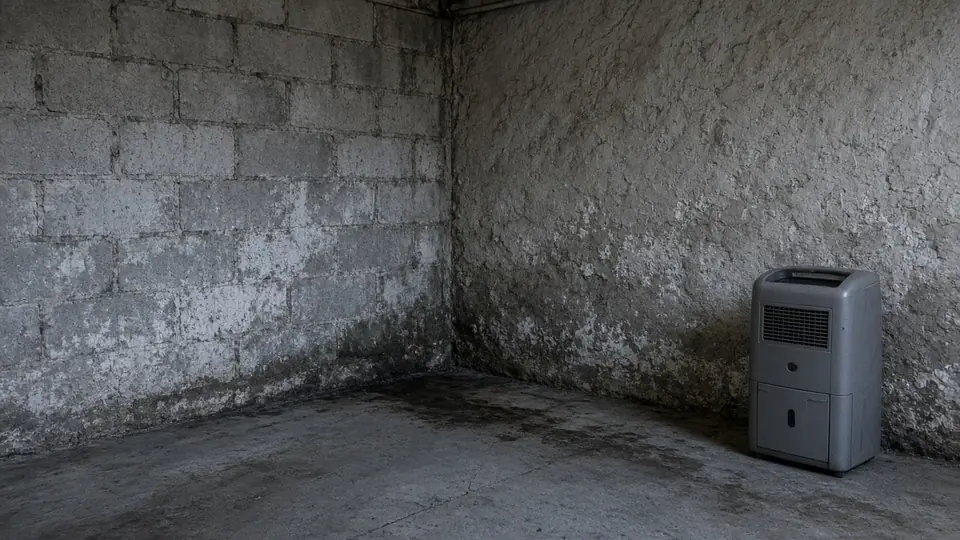
New Rochelle flooded basement cleanup after heavy rain: drains that fill faster than they empty
If heavy rain left your New Rochelle basement wet, dry it first and ask why second. Tell us when the water arrived, and drying gets lined up now, with the assessment of the cause after.
Before you commit to water damage drying in New Rochelle
How soon must a New Rochelle basement be dried after a storm?
Within about a day or two, by EPA guidance. Count from when the water arrived, and start now if you are inside that window.
Is drying enough if the street flooded too?
It handles the wet materials. It does not explain why water reached the basement, so book the assessment if the same storm could bring it again.
What should I photograph first?
The wet areas, the highest line on the wall, any drain with a smell, and the date on each photo. Those help the assessor and the drying company.
Signs
When New Rochelle damp becomes a case for water damage drying
Water that came during the storm and left with itEven water that drained away leaves wet walls behind. Check the baseboard and carpet edge by hand. If the water touches outlets or a panel, or a ceiling is soaked, keep clear and call an electrician.
A smell at a floor drain after the rainA smell after a storm may mean the line backed up. Mention it when you first phone, since the work changes.
Wet carpet where nobody was home to see itFinished lower levels are empty during storms. The first sign is often a smell days later.
A ground-floor unit or garage that took waterGarages and ground-floor rooms are the first places water lands. Report it to the owner at once if you rent.
New Rochelle drains that fill faster than they empty
Six places in the City's plan have storm drains too small for high rainfall. At one of them, the plan says, residents are routinely rescued by boat.
That is a street-level problem. It matters indoors because water with nowhere to go outside looks for a way in or up.
Should water have reached your basement, tell the drying company where the water arrived first, and tell the assessor when the street was flooded.
Culverts the state wants replaced at the Wilmot Roads
In DEC's Hutchinson River study, the New Rochelle Road crossing and the meeting of Old Wilmot and New Wilmot Roads are two of six high risk areas. The study recommends replacing the culverts at the Wilmot Roads.
That is a state recommendation. It does not say the culverts have been replaced, and it says nothing about your cellar.
Use it as context for one question: did your water show up when the streets were flooded, or on a day when they were not? Write down what you remember.
Count from the first drop and mention the drain
Wet areas dry best inside the EPA's one-to-two-day window, before mold gets a foothold. Count from the first hour of the storm, not the day you noticed.
If water rose from a drain, the EPA says to call a professional experienced in contaminated water damage. That job is not plain drying, so say how the water got in.
Once the room is drying, book the assessment so the next ordinary storm does not repeat the work.
Other jobs
Other jobs the same New Rochelle water can lead to