Rye mold removal: what has to come out of a wet finished basement
If mold has set into a Rye basement's drywall or carpet, the job is deciding what comes out and what can stay. Describe what you see, and the assessment that sets the scope gets booked ahead of any removal.
Ask what keeps the water coming back. Asking commits you to nothing.
We help you find out what keeps sending water downstairs and get an assessment booked first, with any removal or drying from a different company after it.
In writing, before you book
Asking us costs nothing and binds you to nothing.
We ask what brings the water back before anyone cuts.
Whoever checks the result is not who removed the mold.
The $100 is applied the way our Terms page sets it out.
Each contractor answers for the work under their own contract.
What should a Rye removal list look like before work starts?
Each item to remove should trace back to a wet or moldy material the assessor found. A list that strips whole rooms with no reason deserves a question. A list that skips a wall the assessor flagged is too short.
Does removing the mold stop it from coming back?
Only if the moisture stops too. Removal takes out the mold and the material it grew on. It does not keep rain out of the basement, which is why the cause comes first.
Do I need a permit in Rye to rebuild the walls?
The City Building Department issues permits. Ask it whether your rebuild needs one, and ask Building and Planning whether floodplain rules apply to your lot.
What should I photograph before anything comes out?
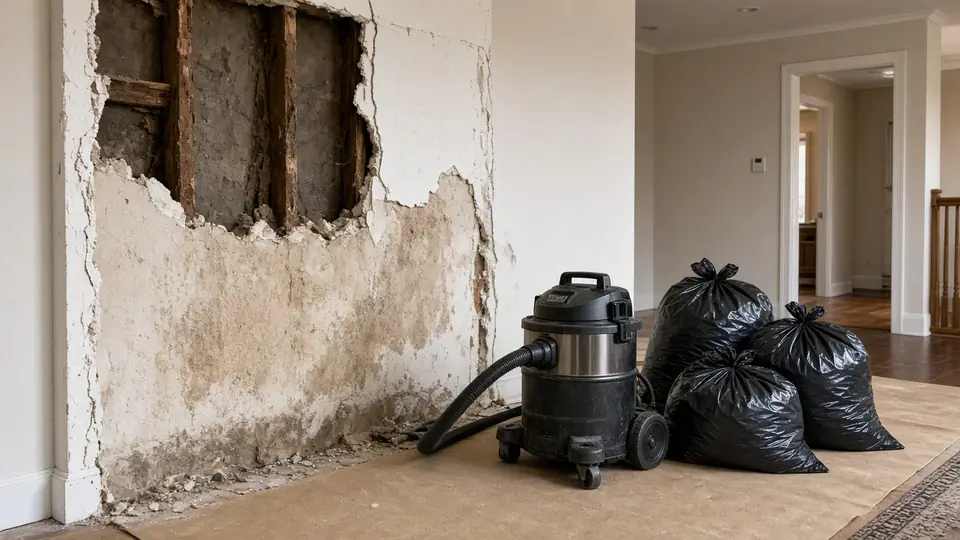
Photograph every wet wall, the highest stain line and the floor, each with the date. The photos help the assessor trace the water and help you compare scopes.
Signs
What Rye owners see before mold remediation
Carpet and pad that stayed dampPorous materials hold water deep inside. The EPA warns that carpet and similar items can need discarding once mold works in, because it may not come out completely.
Drywall stained well above the baseboardA stain that climbs the wall means water reached higher than the floor suggested. Mark the highest line with a pencil and a date so the scope fits the damage.
A musty room behind a built-inCabinets, shelves and paneling cover wet material. A smell with no visible growth still needs someone to look behind the fixture.
Growth across more than about ten square feetState rules draw a line near ten square feet. Past it, the work is a regulated mold project, and a company you pay for it needs a state license number you can look up.
What a finished Rye lower level puts on the removal list
The median Rye home dates to 1957, and a lower level finished since then may have drywall, carpet and trim over older block or stone. Finished surfaces are the first things mold reaches and the last things you can clean.
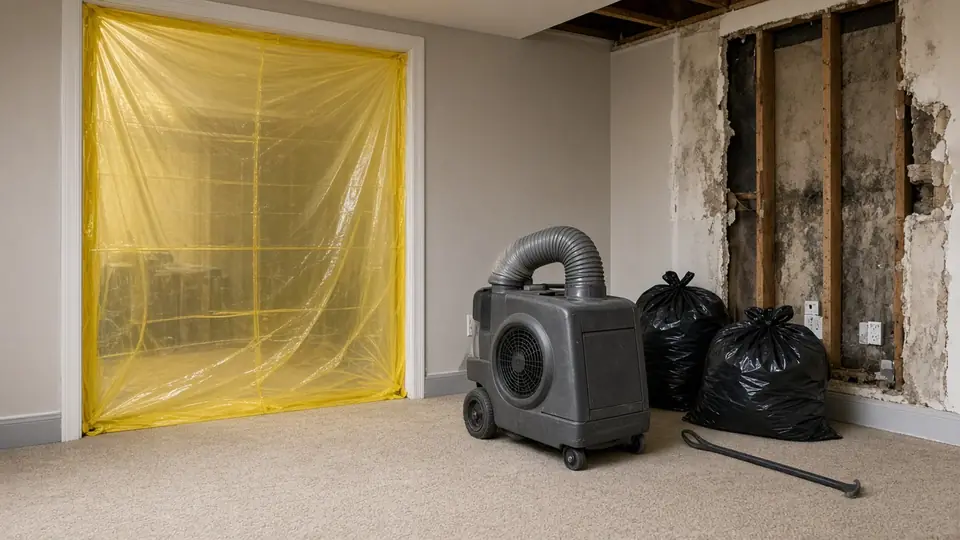
Removal covers what the mold reached: wet drywall, insulation, carpet and pad. A good scope names each room and each material. Ask for that list, then compare it with what the assessor found.
Labor Law section 930 defines remediation as removing and cleaning mold, and says it does not include fixing the moisture source. So a removal quote is not a quote for a dry basement. Ask who fixes the water path, and in what order.
Raised and rebuilt Rye houses carry their own question
Rye requires a finished floor two feet above base flood elevation, and says about a dozen homes were raised after the 2007 floods at the owners' expense. If your house was raised or rebuilt, the living floor moved.
Ask what changed below it. Where did the old basement go? Do new walls cover old wet material? Does the crawl space or garage drain the way it did before?
Tell the assessor the answers, and ask for the removal scope to stop where the damage stops. You should not pay to strip new work that never got wet.
In Rye, the cause is one job and removal is another
Section 947 asks the assessor, to the extent feasible, to confirm the cause was fixed, so the mold is reasonably certain not to return. Ask for that finding before you book a second round of finishes.
Section 936 keeps the two jobs apart: one licensee cannot assess and remove at the same property. Choose the remover yourself, and ask whoever checks the result to be someone else.
If the report says a brook crossing or a street drain is part of the cause, that cause sits outside your lot. It still changes how much it is worth spending inside, so ask the assessor to say so plainly.