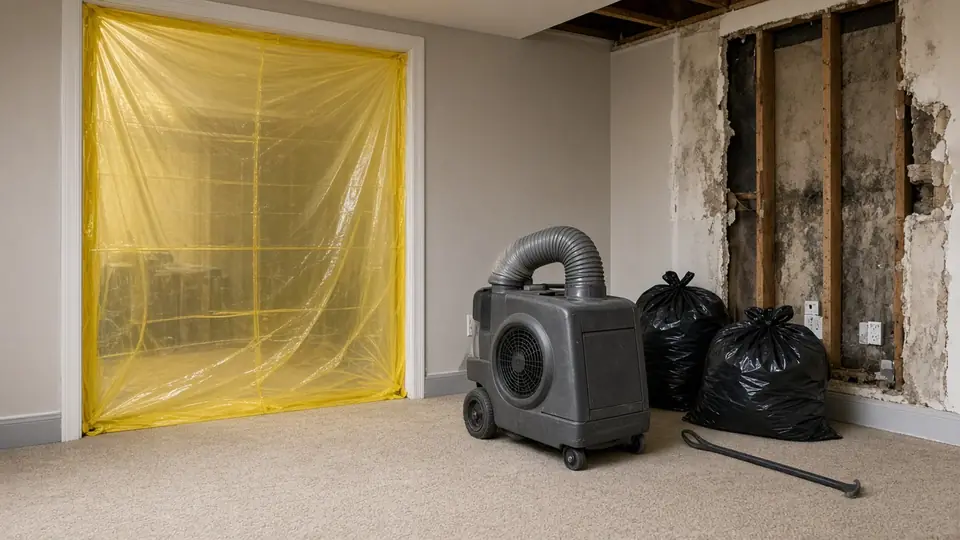
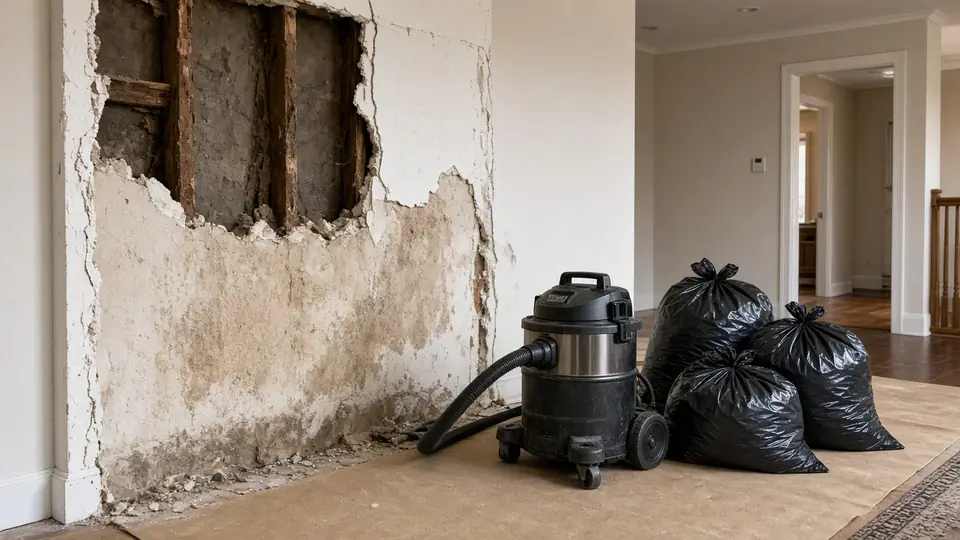
Harrison mold removal worth signing lists the materials and names the water path
You have mold in a Harrison house, and a removal quote that lists drywall but not the water. Book the assessment first, then hand its report to a separate company and ask for a scope that matches.
Ask what keeps the water coming back. Asking commits you to nothing.
We help you find out what keeps sending water downstairs and get an assessment booked first, with any removal or drying from a different company after it.
In writing, before you book
Asking us costs nothing and binds you to nothing.
We ask what brings the water back before anyone cuts.
Whoever checks the result is not who removed the mold.
The $100 is applied the way our Terms page sets it out.
Each contractor answers for the work under their own contract.
Will a Harrison removal stop the mold from returning?
Only if the water path is fixed too. Removal deals with the mold, and state law leaves the moisture source out of it. Ask the assessor who should fix the source, and book that work separately.
Can I rent out or sell a Harrison house after removal?
That is for you and your advisers to decide. What we can say is that a written assessment and a written scope give you papers to share, and a seller still answers the state's disclosure questions honestly.
How do I compare two Harrison removal quotes?
Put each beside the assessment. Check that every line matches a wet reading, that containment and waste are listed, and that neither quote promises a fix for the water.
Signs
When Harrison damp becomes a case for mold remediation
Mold on drywall near the base of a lower wallWet drywall is soft and absorbent. Ask the report to say how high the moisture rose, so the cut line follows readings and not a guess.
Musty carpet in a room that has had water beforeSoft flooring may have to go. Ask which layers are wet, and whether the pad and the floor beneath it were checked.
Staining near a pipe, a drain or a laundry hookupA plumbing source needs a plumber, not a remover. Ask the assessor to say which trade should fix it.
A quote that covers the whole levelAsk which wet readings support each room. A removal should shrink to fit the evidence.
A 1963 median house and what a Harrison scope may meet inside the walls
The median Harrison home was built in 1963. A house that age may have had rooms added, lower levels finished and pipes rerouted. Ask the assessor to say what was opened and what was only checked from the surface.
If carpet, pad or ceiling tile was wet, the EPA says porous materials may need replacing, since mold gets into tiny spaces and might not come out entirely. Ask for each material to be listed with the reason, and ask the removal firm to follow the list. A scope that follows evidence is easier to compare than one written as a single line.
When Harrison's own plan calls its drainage outdated
Harrison's plan describes the town's piping, sewage and plumbing drainage as outdated and inefficient. It names downtown Harrison, Purchase and West Harrison as places where nuisance flooding calls for drainage upgrades. You cannot fix a town system, and the plan does not say yours is affected.
What you can do is ask the assessor where your water entered. If it entered through your own plumbing or roof drainage, that sits on your side of the lot line, and a removal will only last if that is fixed first. State law defines remediation as removing, cleaning and disinfecting mold plus containment and waste handling, with the moisture source left out. Budget for both jobs.
Ask for the two jobs on two separate sheets. One lists what comes out and what is cleaned. The other lists what stops the water: a gutter that discharges too near the wall, a sump that is not working, a pipe that weeps. When you see both on paper, you can decide which to do first and which can wait.
Whose signature goes on a Harrison removal scope
If you own the house, you sign. If you rent it, the owner signs, so send them the assessor's report and the removal scope together. Either way, the firm that wrote the report should not be the one that does the work, since state rules keep those two roles apart at one property.
Ask the removal firm to state in writing what it will take out, what it will clean in place and how it will contain the work. When it finishes, the assessor checks again and names the type of contractor who can address any cause that remains. Keep that paper with your house records, because a buyer may ask for it.