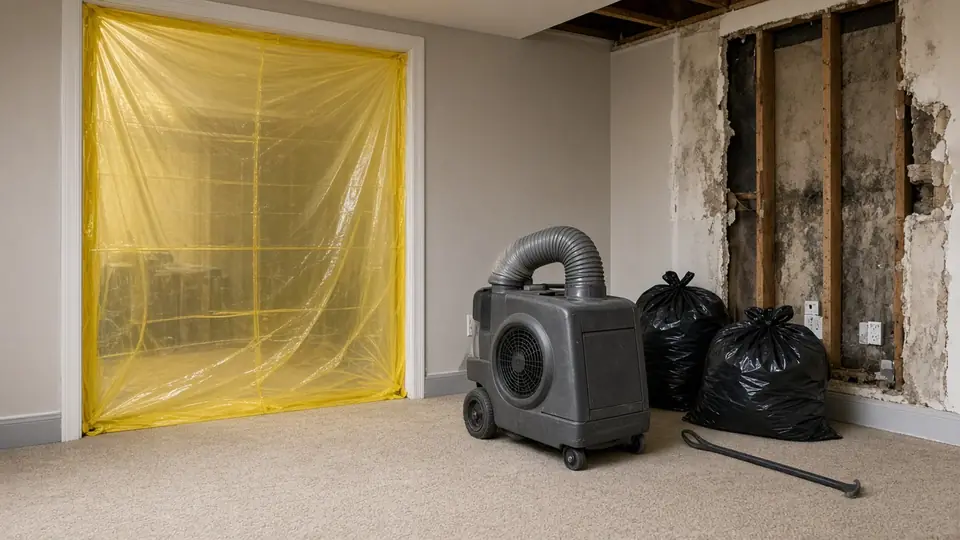
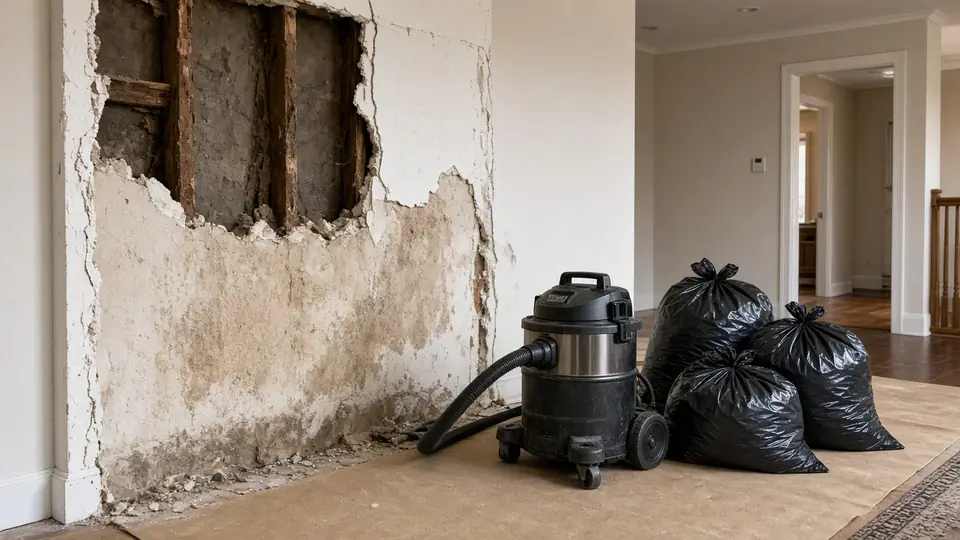
Mold removal in Hartsdale starts with deciding whether removal is the job at all
You see mold in your Hartsdale home and want it gone, but you do not know how much is there or why. Book the assessment first, so any removal is sized to what is really there.
Ask what keeps the water coming back. Asking commits you to nothing.
We help you find out what keeps sending water downstairs and get an assessment booked first, with any removal or drying from a different company after it.
In writing, before you book
Asking us costs nothing and binds you to nothing.
We ask what brings the water back before anyone cuts.
Whoever checks the result is not who removed the mold.
The $100 is applied the way our Terms page sets it out.
Each contractor answers for the work under their own contract.
Is a small mold patch in Hartsdale something I can handle personally?
State rules call mold work above ten square feet a project, and they exempt a residential owner who does it personally on their own property. Measure honestly, since stains are often larger underneath, and find the water source either way.
The assessor says I do not need removal. Is that a real answer?
Yes. Some homes need a leak fixed and a surface cleaned, not a removal project. Ask the assessor to write down why, so the paper backs the decision.
Who decides about mold removal in a Hartsdale condo?
Start with your board or managing agent, since walls, roofs and stacks may be shared. Ask who books the work and whether the building has rules for contractors.
Signs
Signs a Hartsdale basement needs mold remediation
A small stain on a bathroom or closet wallA surface stain can hide more behind it. Ask the assessor how large the affected area really is, because the size decides what kind of job it is.
Mold on a ceiling below a bathroom or roofFix the leak first. State law's definition of remediation leaves out the moisture source, so removal alone will not stop water from above.
A musty smell with nothing visibleSmell alone does not tell you where to cut. Ask for moisture readings before anyone removes a thing.
Carpet or insulation that got wet earlierPorous items can need replacing, the EPA says. Ask the report to list which ones and why.
Ten square feet: where a Hartsdale patch becomes a mold project
In New York, work on mold turns into a mold project past ten square feet. The Labor Department exempts a residential owner who does that work personally on their own property. Everyone else hires a mold remediation company for it, and that company must not be the one that assessed the job.
The catch is that stains can mislead. A palm-sized mark on drywall can sit on a much larger wet area. Ask the assessor to measure the affected area and write the figure down. That number tells you which kind of job you have, and it gives you something to hold removal quotes against.
Mid-century Hartsdale houses and what the walls may hold
Hartsdale's median home was built in 1956, so many have probably been repainted, remodeled and rerouted since. A house with that history can hide an old leak behind a new finish. Ask the assessor to say what was opened and what was only read from the outside.
If carpet, pad or insulation was wet, the EPA says porous materials can need discarding, since mold works into their tiny spaces and may not come out completely. Ask for each material to be listed with a reason. A removal that follows the list is easier to check than one described in a single line.
Ask, too, about anything the assessor could not see. Insulation inside a closed wall, the back of a built-in cabinet and the underside of old flooring are common blind spots. A good report says plainly what was not checked and what it would take to check it, so you can decide whether that extra step is worth it.
Choosing the removal company once the Hartsdale report is in
The firm that wrote your assessment may not do the removal at that property. Book the assessor first, bring the report to a couple of remediation firms, and have each quote from it. If one wants to start before reading it, ask why.
When the work ends, the assessor checks whether the cause was fixed, as section 947 asks, and names the type of contractor who can address any cause left. Sometimes the honest answer is a small job or none. A report that says so is a good result, and it spares you paying for work nobody needed.
If the report does call for removal, keep it where you can find it. A later buyer, a board or a lender may ask what the mold was, where it was and what was done about the water. One folder with the assessment, the scope and the final check answers all three.
Other jobs
When mold remediation is not where Hartsdale should begin