A White Plains mold removal scope should name every wall it touches
Mold has turned up in your White Plains home, and the removal quote you hold is silent on the water. Ask for the source finding first, then have a separate firm price from that paper.
Ask what keeps the water coming back. Asking commits you to nothing.
We help you find out what keeps sending water downstairs and get an assessment booked first, with any removal or drying from a different company after it.
In writing, before you book
Asking us costs nothing and binds you to nothing.
We ask what brings the water back before anyone cuts.
Whoever checks the result is not who removed the mold.
The $100 is applied the way our Terms page sets it out.
Each contractor answers for the work under their own contract.
Questions about mold remediation, for White Plains
Can a removal firm start before I have an assessment?
It can, but you lose the chance to match the scope to the evidence. Ask for the written source finding first, then have the firm price from it. A firm that will not read the report is worth a second question.
The mold is on a wall I share with a neighbor. What now?
Tell your board or owner in writing, with photos. Ask who may authorize work on the shared wall, and hold the removal until that is settled.
Will removal fix the leak that caused the mold?
No. State law leaves the moisture source out of the definition of remediation. Ask the assessor what type of contractor can fix the source, then book that work separately.
Signs
Marks that point to mold remediation in White Plains
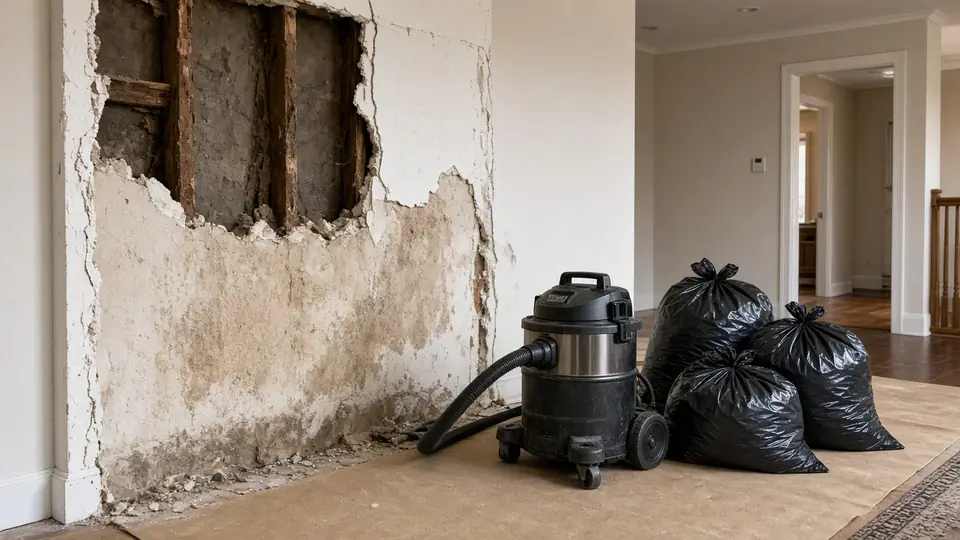
Mold on a bedroom or closet wall against the exteriorAn outside wall can take water from a roof, a window or a joint. Ask the assessor to trace it before the removal firm touches the wall.
A quote for the whole floor when the stain is on one wallAsk which readings support each room on the list. A scope should shrink to match the evidence, not grow beyond it.
Carpet that stayed wet after a pipe leakThe EPA says some porous items must be replaced. Ask the report to name them and to say which ones can be cleaned.
A plan that stops at the face of a shared wallIf the other side is a neighbor's or the building's, the work needs their say. Tell your board or owner before anyone starts.
Your unit, the common walls and what a removal scope can touch
A removal firm can only work where you have the right to let it in. In a house, that is every wall. In a large building, it is your unit, and the shared walls need the owner or the board to agree. A scope that ignores that line stalls halfway, with the cost already spent.
Ask the removal firm to mark on a plan which surfaces it will take out, which it will clean in place, and which it will leave for the owner. Keep that plan with the assessment. When a dispute starts later, one drawing settles more than a long email chain.
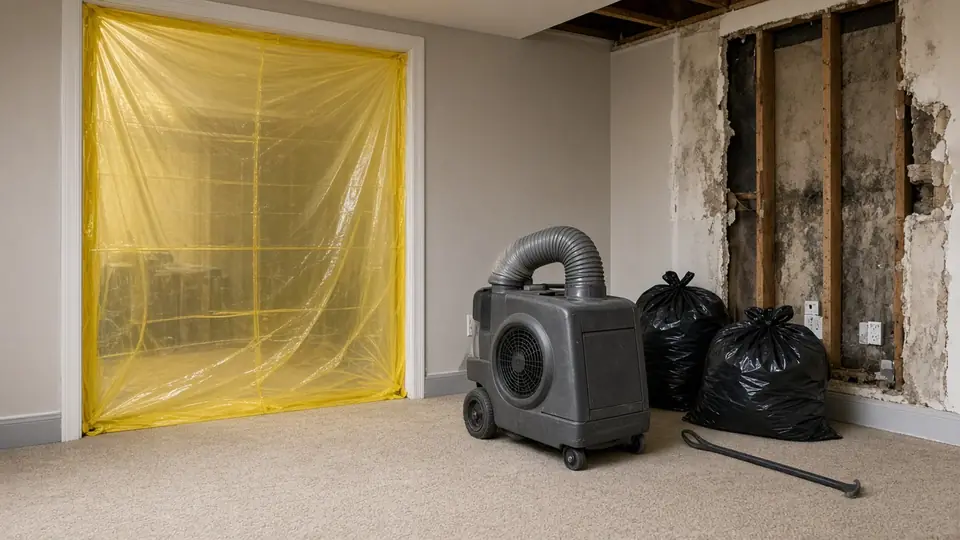
Ask the firm, too, how it will keep dust and debris from reaching the hallway and the units next door. In a shared building, that question matters as much to your neighbors as the removal itself, and an answer in writing helps if anyone complains.
Before a structural wall is opened, ask City Hall who issues the permit
A removal scope can reach a wall that holds the building up. Before anyone opens one, ask City Hall which office issues the permit, and ask the removal firm to say in writing whether its scope needs one. Keep the answer with the plan.
The EPA notes that carpet and ceiling tile may have to go once mold has moved in. State law defines remediation as removing, cleaning, sanitizing or disinfecting mold, plus containment and waste handling, and leaves out fixing the moisture source. So plan on a second job, for the leak, and ask the assessor who should do it.
Who checks the White Plains work when the removal ends
One firm may not both assess and remove at the same property, and the state also bars shared ownership of the two firms. So you hire twice. Ask the first for the written source finding, and take it to the second for a priced scope.
When the removal ends, the assessor looks again. Section 947 wants to know whether the cause was dealt with, and if it was not, the assessor must name the type of contractor who could address it. Sometimes the report shows a small job, or none. That is a fair result, and it spares you paying for a project nobody needed.
Keep the assessment, the scope and the final check together. Later, a buyer, lender or board may ask what the mold was, where it was and what was done about the water, and one set of papers answers all three.