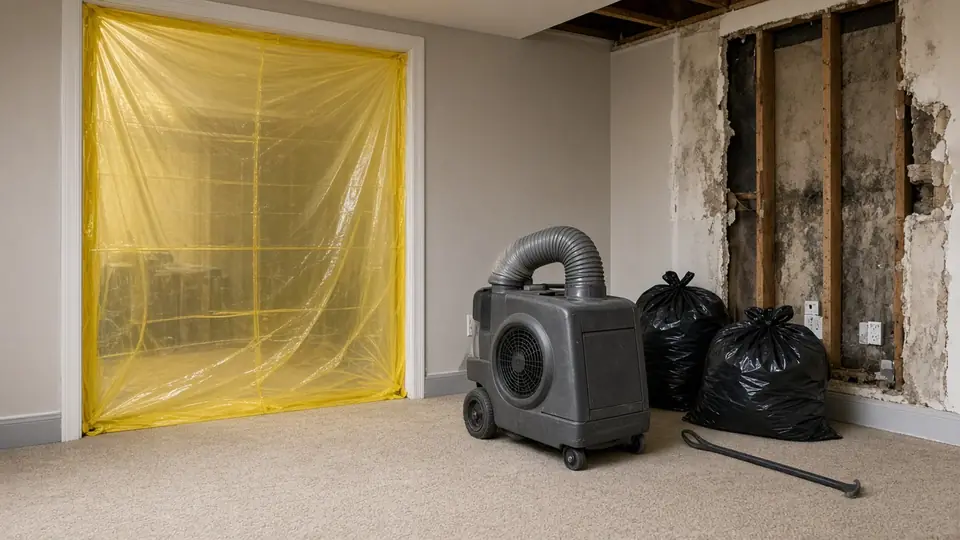
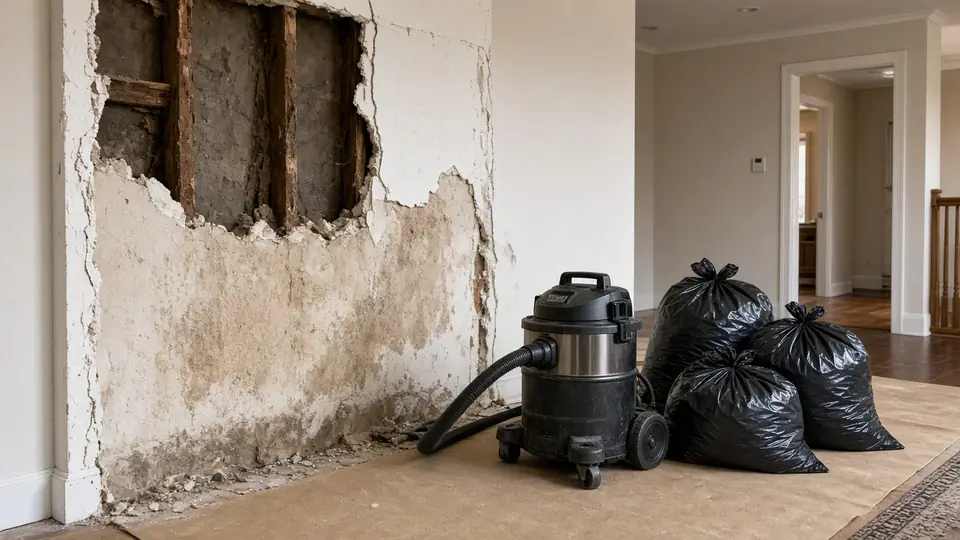
Mold removal in Scarsdale, scoped to what the water actually reached
Mold has shown up in your Scarsdale finished basement, and you want to know what comes out before you sign for it. Book the assessment first, then ask a separate company to price only what the report names.
Ask what keeps the water coming back. Asking commits you to nothing.
We help you find out what keeps sending water downstairs and get an assessment booked first, with any removal or drying from a different company after it.
In writing, before you book
Asking us costs nothing and binds you to nothing.
We ask what brings the water back before anyone cuts.
Whoever checks the result is not who removed the mold.
The $100 is applied the way our Terms page sets it out.
Each contractor answers for the work under their own contract.
Will removal stop mold from coming back in my Scarsdale basement?
Not by itself. State law's definition of remediation leaves out fixing the moisture source. If the same water arrives again, so can the mold. Ask for the source finding before you agree to the scope.
Can the company that assessed my basement do the removal too?
No. State rules keep assessment and removal with different firms at the same property. Ask for two separate companies, and ask each to put its part in writing.
How do I check that a removal scope matches what was wet?
Lay the written assessment next to the scope. Each line to be removed should match a wet reading or a visible patch. A line with no match is worth a question before you sign.
Signs
What Scarsdale owners see before mold remediation
Carpet and pad that stayed wet for daysPorous material like carpet and pad can need to go, the EPA says, because mold works into it and may not come out completely. Ask the report to name each material and its condition.
Drywall or built-ins along the lower wallA finished lower level hides the back of the wall. Have readings taken under the finish, and let the removal follow them instead of a hunch.
A stained garage wall or stair landingA garage can take the same water as the basement. Ask the assessor whether that stain came from it.
A quote that lists drywall but skips the waterA scope that lists drywall and carpet but not the source asks you to buy the job again later. Hold it until the source is named in writing.
What comes out of a finished Scarsdale basement and what stays
Hard surfaces such as concrete, tile and metal can often be cleaned. Soft, absorbent finishes are different. The EPA warns that carpet and ceiling tile can need discarding once moldy. The EPA names those two, so ask the assessor which layers behind them, such as drywall and built-in cabinets, are affected. A good scope lists what gets cleaned in place and what gets taken out.
State law defines mold remediation as removing, cleaning, sanitizing or surface-disinfecting mold, plus containment and waste handling. It does not include fixing the underlying moisture source. So the company that removes the mold is not the one that fixes the roof leader or the sewer line. Plan for two jobs, and ask for each to be written down.
Before anything is bagged, ask the removal company to list each room, wall and material it will take out, and each it will clean in place. A line that says only "basement" tells you nothing, and you will pay for guessing later.
Why a cleaned basement can get wet again in the next ordinary rain
The Village's survey of owners in the studied area found basement and garage flooding common. The study also finds the drainage system overloaded in a 1-year storm. If your source is on the street side, new drywall does not change it.
Ask the assessor one thing before you hire anyone: was the source inside your control? If it was, fix it before the removal company closes the wall. If it was on the street side, ask your contractor which finishes tolerate a wet floor, so the next wet day costs you less to clean. Garage walls and stairs deserve the same question as the basement.
Who checks the work when a Scarsdale removal ends
Book the assessor first, and ask for the removal scope in writing.
When the removal is done, the assessor reads the result. Under section 947, that check looks, to the extent feasible, at whether the underlying cause was fixed, so the mold is unlikely to return. If it was not, the assessor must name the type of contractor who could address it. Keep that report with your house papers, because someone buying the house later may want to see it.