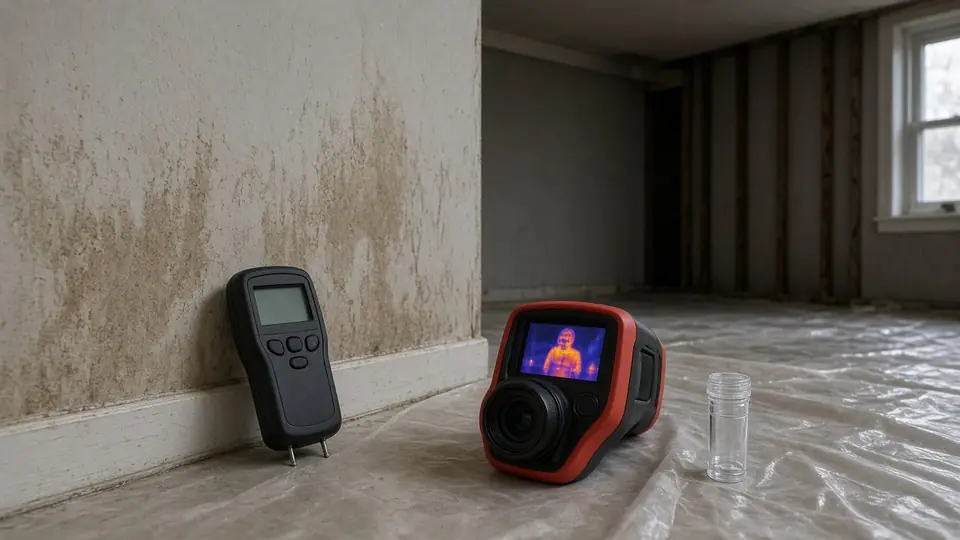
Mold assessment in Harrison: let your walls answer where the maps stay silent
Your Harrison basement is damp or moldy, and nobody can tell you whether the water was a fluke or a pattern. Tell us what you saw, and book the assessment so the source is written down.
Ask what keeps the water coming back. Asking commits you to nothing.
We help you find out what keeps sending water downstairs and get an assessment booked first, with any removal or drying from a different company after it.
In writing, before you book
Asking us costs nothing and binds you to nothing.
We ask what brings the water back before anyone cuts.
Whoever checks the result is not who removed the mold.
The $100 is applied the way our Terms page sets it out.
Each contractor answers for the work under their own contract.
Before you commit to a mold assessment in Harrison
My Harrison address is outside every flood zone. Can the water still be a real problem?
Yes. The town itself says its maps leave out some areas. Judge your basement by what the walls and drains show, and ask the Engineer's office what applies to your property.
What should I bring to a Harrison assessment?
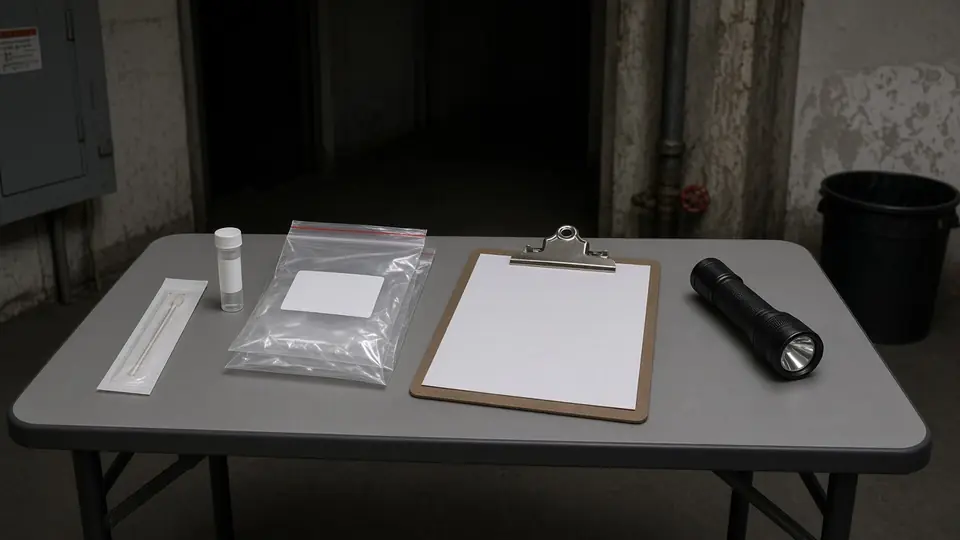
Bring dated photos, the date you last saw the spot dry, a note of the rain or leak just before, and any repair you made. Add where each downspout empties.
Is the repeat-damage list a list of flooded homes?
It is a list of areas where paid claims show properties flooded repeatedly. Homes whose owners filed no claim are not in it, so use it as a question for the town, not a ruling on your house.
Signs
When Harrison damp becomes a case for a mold assessment
You are told your address is outside any flood areaHarrison says the federal maps skip some areas. Being outside a zone does not clear a basement, so give the assessor the story of the water.
Water showed up after an ordinary rainWrite down which rain and when. A wall that wets in ordinary weather points toward a downspout, a crack or a drain line, and the assessor can test each.
A smell comes from a floor drainThe town calls its sewer and plumbing drainage outdated. If water or odor rose through a drain, tell the assessor first, because that is a different job.
The finished wall is cool and the paint is freshA recent repaint can hide an old edge. Say what you painted and when, and ask for readings beyond the stain.
Harrison says its flood maps miss some areas, so the assessor reads the house
The county plan records Harrison saying that the current flood maps leave some areas out. The town plans mapping of its own, covering rivers, rainfall, urban runoff and overland flow. Until that reaches your street, you cannot lean on a zone to rule water in or out.
A contractor, a buyer or a lender may tell you that you are outside any zone, so the water must be a fluke. Do not accept that on its own. Ask what the walls, the grade and the drains show, and ask for it in writing.
That leaves the building. Ask the assessor to check where the roof water goes, how the grade falls beside the foundation, whether a sump runs and where the slab or wall is cracked. Ask for readings in several spots, marked on a sketch. A report built that way answers your question without any map.
West Harrison, Purchase or downtown: one hall answers for all three
Harrison treats its three sections as one jurisdiction. The Building Department issues permits, and the Engineer is the floodplain administrator, working under Town Code Chapter 146. So you call the same offices from any section. You do not need to learn which neighbor's rules apply.
The town's repeat-damage list comes from paid claims, so it records payouts. If your street is not on it, that does not mean the basement was never wet, and if it is on it, the list says nothing about your house. Treat the list as a prompt to ask the Engineer a question, then let the assessor read your own walls.
What the Harrison report should settle before you sell or repair
You need a source named in plain words: roof water, a drain line, groundwater or something else. If you plan to sell, the state's disclosure form has questions on standing water from flooding, drainage or grading trouble, and on water that seeped in after heavy rain. A written finding gives you something firm to read beside those questions.
Have the assessor state the likely source up top and list anything left unchecked. Share the paper with a buyer's agent, a lender or a family member helping you decide. It turns a vague worry into a short list of repairs you can price one at a time.
Section 947 explains why the source matters. When a removal ends, the assessor must ask, as far as is feasible, whether the underlying cause was fixed. Settle it now, and book a different company for any removal.